Do we really wear 20% of our clothes?
Said everywhere, measured nowhere. Where the 80/20 wardrobe comes from, what has actually been counted, and how to find your own number.
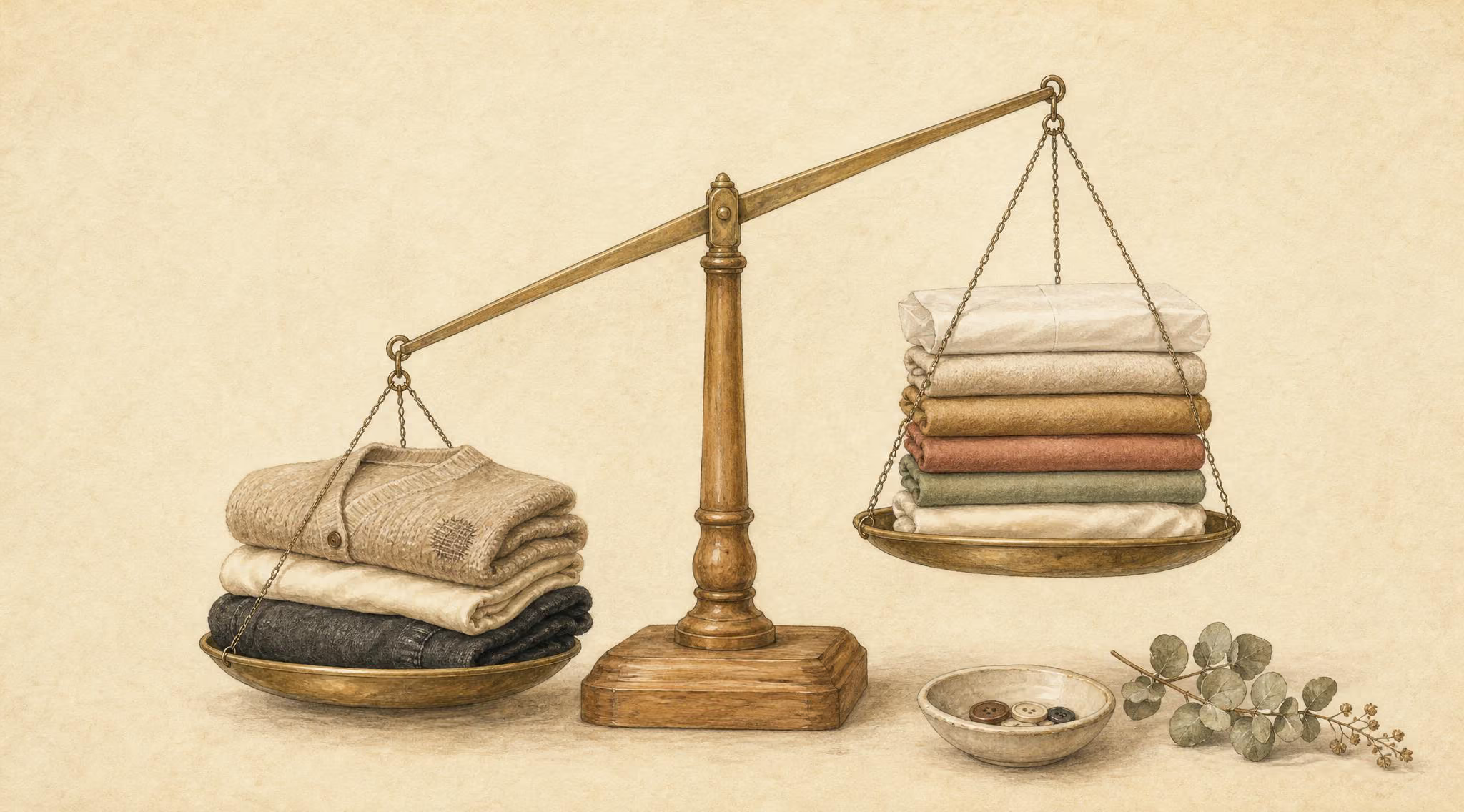
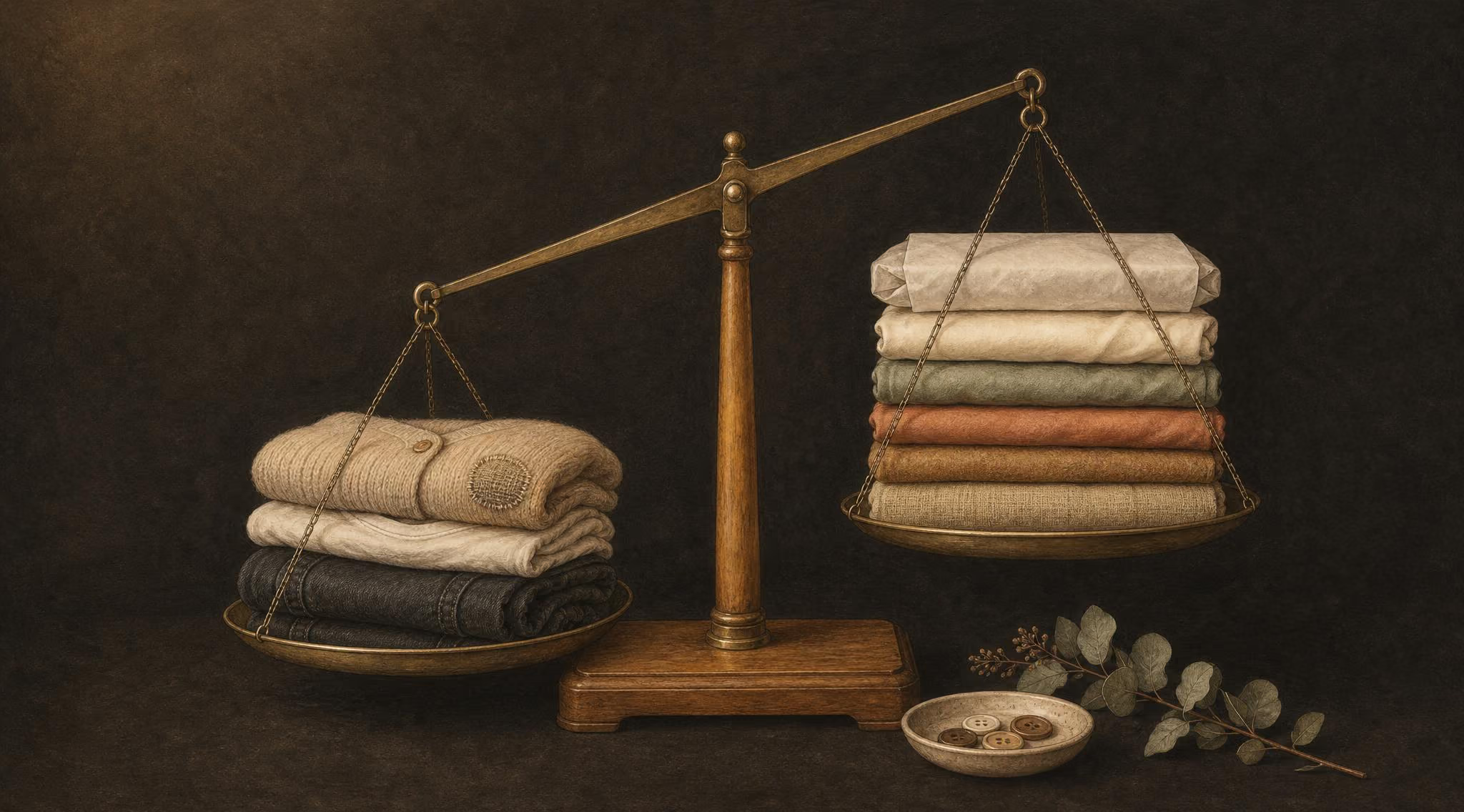
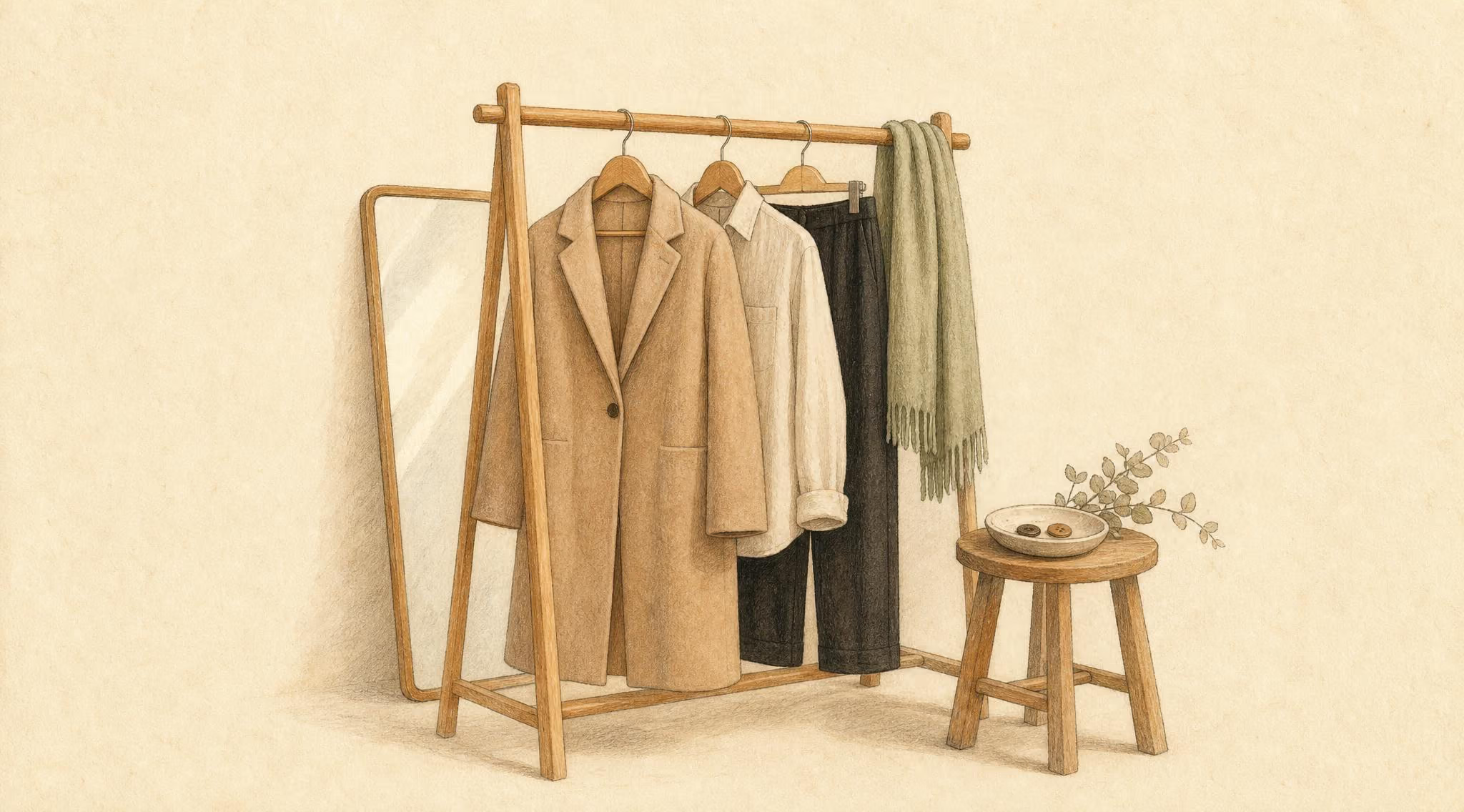
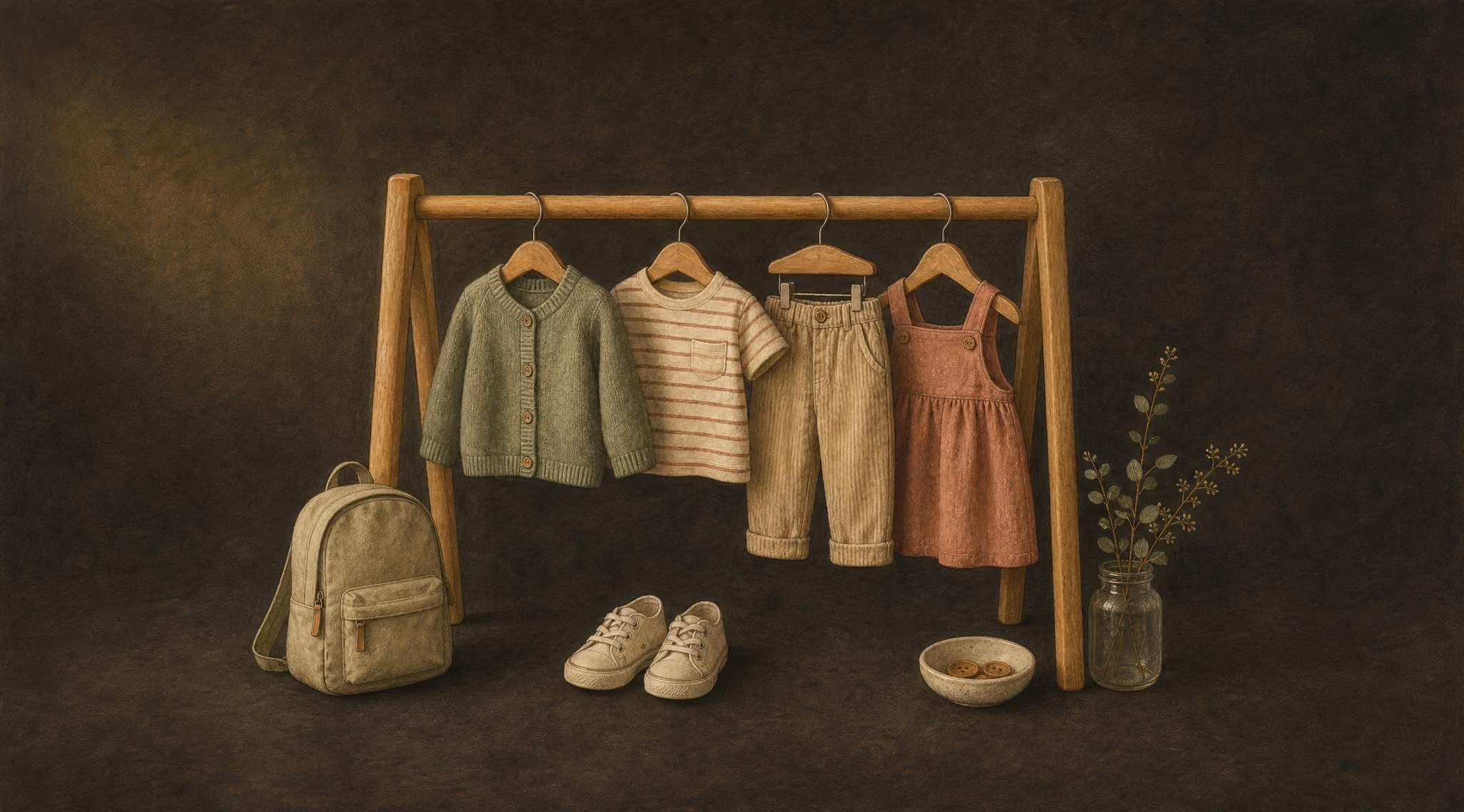
Look at the hangers, not the clothes. At one end of the rail they're bunched and a little crooked, because the same jeans, the same two jumpers and the shirt that goes with everything come off them and go back on several times a week. Further along, they hang evenly spaced and perfectly straight, exactly as they did on the day each piece came home.
There's a line for this, and you'll have read it: we wear 20% of our clothes 80% of the time. Stylists repeat it, decluttering books open with it, and it usually arrives with "studies show" or "statistically" in front of it. It sounds true, which is most of why it travels.
Nobody has ever measured it.
Where the number comes from
The 80/20 part belongs to economics, and only loosely. In 1896 and 1897 the Italian economist Vilfredo Pareto noticed that incomes in countries as different as England, Ireland, the German states, the Italian cities and Peru fell along much the same curve, a small share of people taking a large share of the income. He called the result "very remarkable". He did not write "80/20".
The name came later. In 1951 Joseph Juran, an engineer writing a handbook on quality control, gave Pareto's name to an idea he later called the "vital few and trivial many": most of a factory's losses come from a few causes, so fix those first. In 1974 he wrote a short paper called "The Non-Pareto Principle; Mea Culpa", admitting that "I had mistakenly applied the wrong name to the principle". By then the name had stuck.
From the factory it spread to self-help, where it needed everyday examples. In 1973 Alan Lakein's book on managing your time noted, among a list of such examples, that "80 percent of the washing is done on the 20 percent of the wardrobe that is well-used". By 1981 a self-help anthology had turned washing into wearing: "most of us wear about 20 percent of our clothes 80 percent of the time". In 1984 Don Aslett's decluttering book Clutter's Last Stand said much the same. And Richard Koch's The 80/20 Principle, in its 1998 edition, put it between carpets and burglar alarms: "20 per cent of your clothes will be worn 80 per cent of the time". There's no footnote.
The line began as an example, not a finding.
That's how the number was born: as an illustration of a rule, chosen because everyone could picture it. Somewhere along the way it stopped being an example and started being a statistic.
What has actually been counted
Researchers and survey firms have counted something close by, and easier to ask about: how much of a wardrobe hasn't been worn at all in the past year.
- UK, 2012. WRAP, the UK waste charity, surveyed 7,950 adults and found that "around 30% of clothing in the average wardrobe has not been worn for at least a year, most commonly because it no longer fits".
- UK, 2022. A second WRAP survey, of 6,000 adults in late 2021, found people owned an average of 118 items by their own count, socks and underwear included, of which 31, or 26%, hadn't been worn in the past year. Skirts and dresses sat unworn most often; underwear and socks far less.
- Germany, 2015. A Greenpeace survey of 1,011 adults found 95 items each, not counting underwear and socks. One in five was "practically never worn", and just under 40% were worn less than once every three months.
- Belgium, 2024. The best evidence comes from researchers who went into people's homes and counted. A team from KU Leuven counted 30,056 garments belonging to 156 adults in Flanders: 198 each on average, of which 22% hadn't been used in the past year. Three-quarters of those were in good condition. A follow-up that added 160 more wardrobes, 314 in all, found 27%.
- UK, 2026. A survey for Oxfam this July, of 3,037 adults, found 80 items each, 32% of them unworn in the past year.
Different countries, methods and years, and still a fairly steady answer: somewhere between a fifth and a third of what we own has gone a whole year without being worn. That's a lot of clothes, but it's a long way from four in five.
The one person who tested it
The 80/20 claim is about something subtler: how the wears are shared out among the clothes that do get worn. That takes a diary, and we found no published study that has kept one. The Leuven researchers suggest wardrobe apps and tagged garments as a way to measure wear more objectively in future.
So the best evidence is one man's spreadsheet. Over eleven months, the top fifth of his 97-odd pieces took about 60% of his wears, not 80%. At ten months, reaching 80% took his top 37%. And the number moved with how long he counted. His first month on its own came out at 70%. In any single month, a wardrobe looks narrower than it is, because the coat for colder weather and the clothes for occasions haven't had their turn yet. His eleventh month, spent at home in the spring 2020 lockdown, hit 82%.
It's a sample of one. But it shows what the slogan hides. Wear really is lopsided, a few pieces carrying much of the load, and how lopsided depends on how long you look and how wide your life is that month.
Why the quiet end stays quiet
The surveys agree on the main reason clothes go unworn, and it isn't neglect. Most often they no longer fit, which was WRAP's top answer in 2012. In its 2022 survey the other big reasons were pieces kept for occasions only, and pieces people liked but that were "not a priority". In Flanders, people were willing to part with fewer than half of their dormant clothes, and of the ones they kept, most were kept to be worn one day.
The busy end has its reasons too. A Dutch audit of 958 wardrobes in 2025 asked people why their favourite piece was their favourite. The top answer, from 43%, was that it was comfortable and fitted well. Looks came second, and third was that it went with everything. By those answers, a favourite is less often the most striking thing in the wardrobe than the one that fits and works with the rest.
Find your own number
You don't need a spreadsheet. Two ways, depending on which question you want answered.
How much of my wardrobe do I wear? Turn every hanger the wrong way round. When you wear something and put it back, hang it the right way. At the end of a season, count the hangers still turned. That's the quiet end, and dividing it by the total gives your share.
Is my wearing lopsided? Keep a tally for a month: one line per piece, a mark for each day it's worn. At the end, put the pieces in order of marks. Take the top fifth of the pieces, add up their marks, and divide by all the marks. That's your own version of the 80.
To make it fair:
- Leave out socks, underwear and sports kit. They take turns by design.
- Count only what's in season. A summer dress unworn in November tells you nothing.
- Treat a month as a first look, a season as a fair one and a year as the whole story.
What to do with the quiet end
Not much in a hurry, and none of it with guilt. Sort it in your head into three:
- Kept for an occasion. The suit, the dress for weddings, the coat for real cold. Being worn rarely is their job. Leave them be.
- Kept for a reason you can fix. It doesn't fit, it needs a button, it needs a hem. Fit is the commonest reason clothes go unworn, and a tailor or a needle often solves it in an afternoon. If it can't be fixed, it will fit someone else.
- Kept for nothing in particular. Try it once with pieces from the busy end. If it still won't go, it's told you something for the next time you're in a fitting room.
The busy end of the rail isn't a failing. It's your taste, already decided.
The busy end deserves the attention instead. Those bunched, crooked hangers hold the clothes that fit, feel right and go with everything else you own, and they're the best guide there is to what's worth buying next, if anything. Wear them without apology: repeating them is what they're for. And when something new comes up for a decision, ask whether it belongs at that end of the rail, or whether it will be another straight hanger. Thirty wears is a good place to set the bar.
Sources
- Vilfredo Pareto, Cours d'économie politique, volume 2, book III, chapter 1, F. Rouge, Lausanne, 1897.
- J. M. Juran, “The Non-Pareto Principle; Mea Culpa”, Juran Institute, 1974.
- Alan Lakein, How to Get Control of Your Time and Your Life, Peter H. Wyden, 1973.
- Build a Better You — Starting Now!, self-help anthology, September 1981.
- Don Aslett, Clutter's Last Stand, Writer's Digest Books, 1984.
- Richard Koch, The 80/20 Principle, revised edition, Nicholas Brealey, 1998, chapter 1.
- WRAP, Valuing Our Clothes, July 2012.
- WRAP, Citizen Insights: Clothing Longevity, 2022, and its press release, October 2022.
- Greenpeace Germany, Wegwerfware Kleidung, survey by Nuggets Market Research, November 2015.
- Vermeyen and others, “Behind Closed Doors”, Journal of Circular Economy, February 2025.
- Vermeyen and others, “Unravelling the service lifespan of garments”, Cleaner and Responsible Consumption, January 2026.
- Oxfam GB, State of Style 2026, survey by Censuswide, September 2026.
- Jack Clancy, “I wore 20% of my clothes 80% of the time during coronavirus” and the ten-month study, Fat, Broke and Stupid, April–May 2020.
- Hogeschool Rotterdam and partners, Nationale Kledingkast Audit 2025, 2025.
Mark what you wear in Dresd and every piece keeps its own count and the day it was last worn. The ones that have gone quiet gather under "Hiding in plain sight", so your own number is there without turning a single hanger.
Get the app