Wash it less: what really needs a wash after one wear
Plenty of clothes are washed out before they are worn out. What needs the machine every time, what is better aired or brushed, and how to tell the difference.
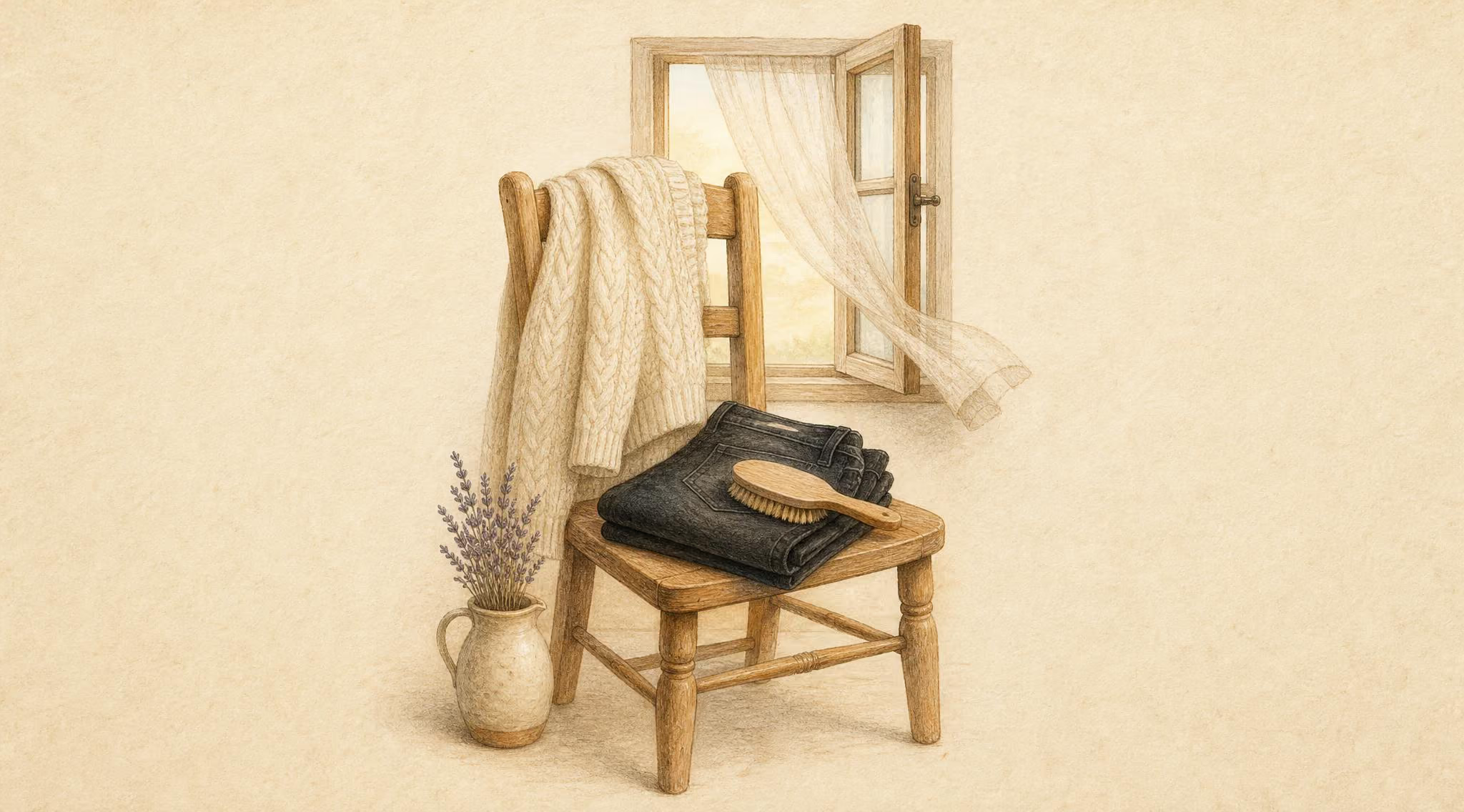
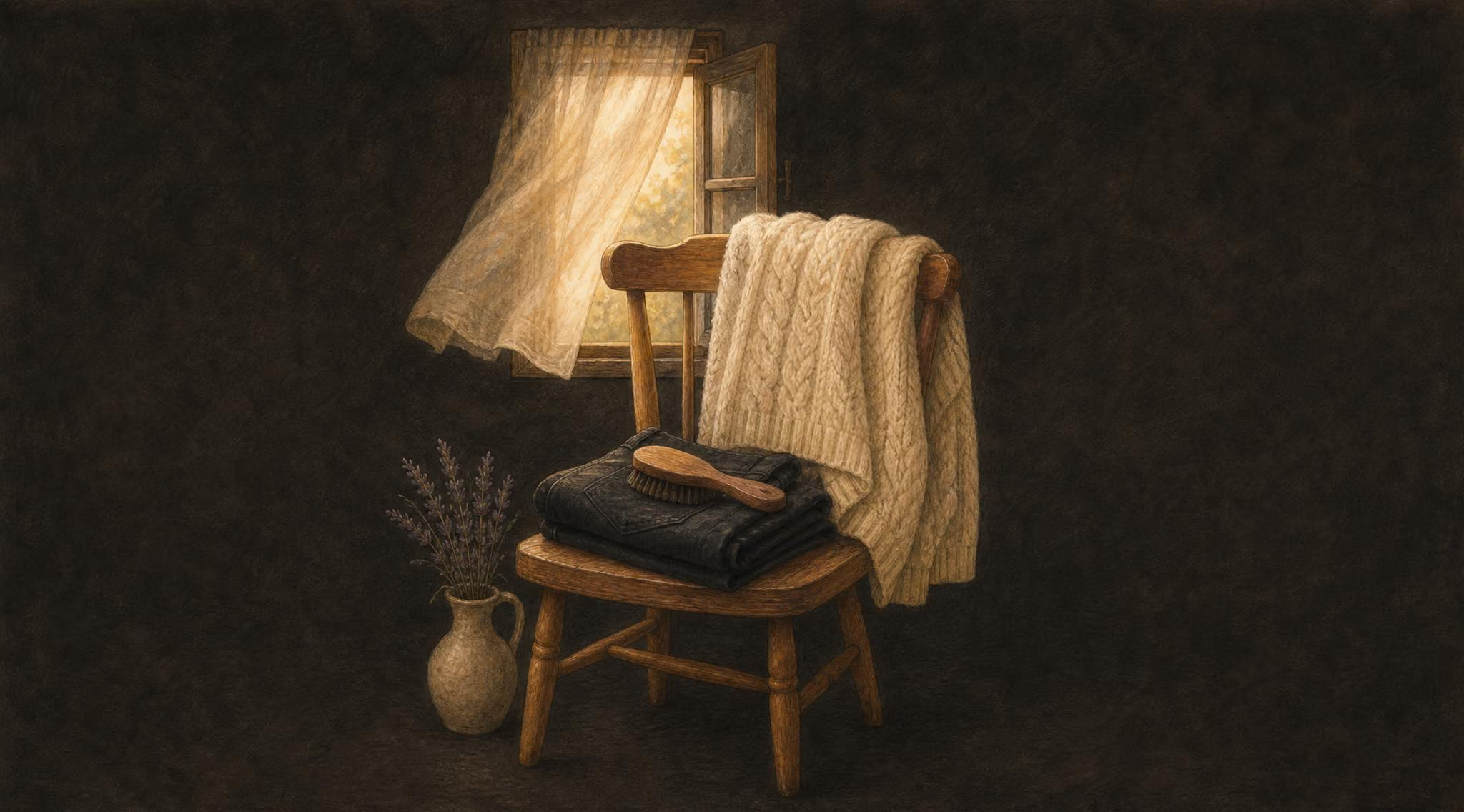
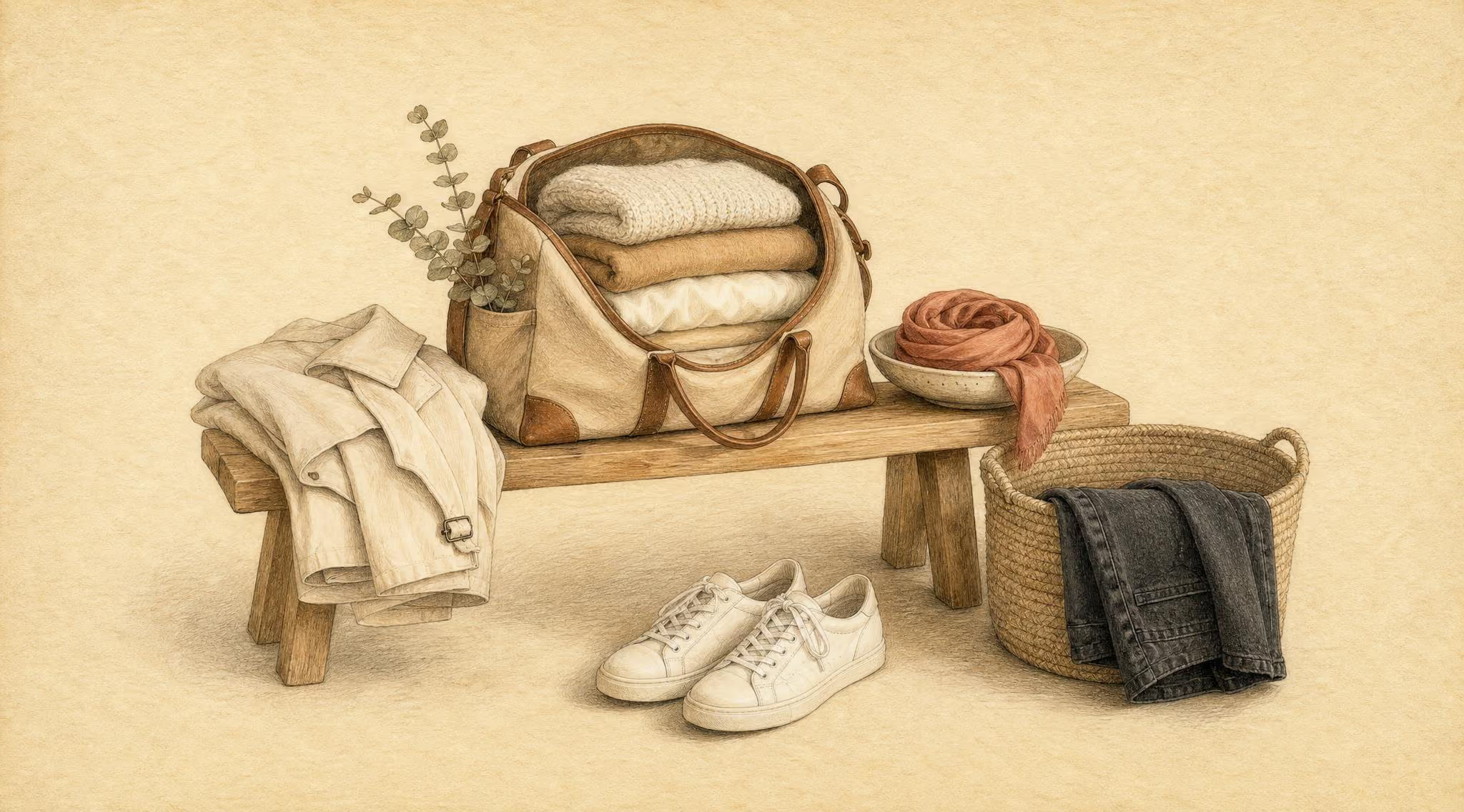
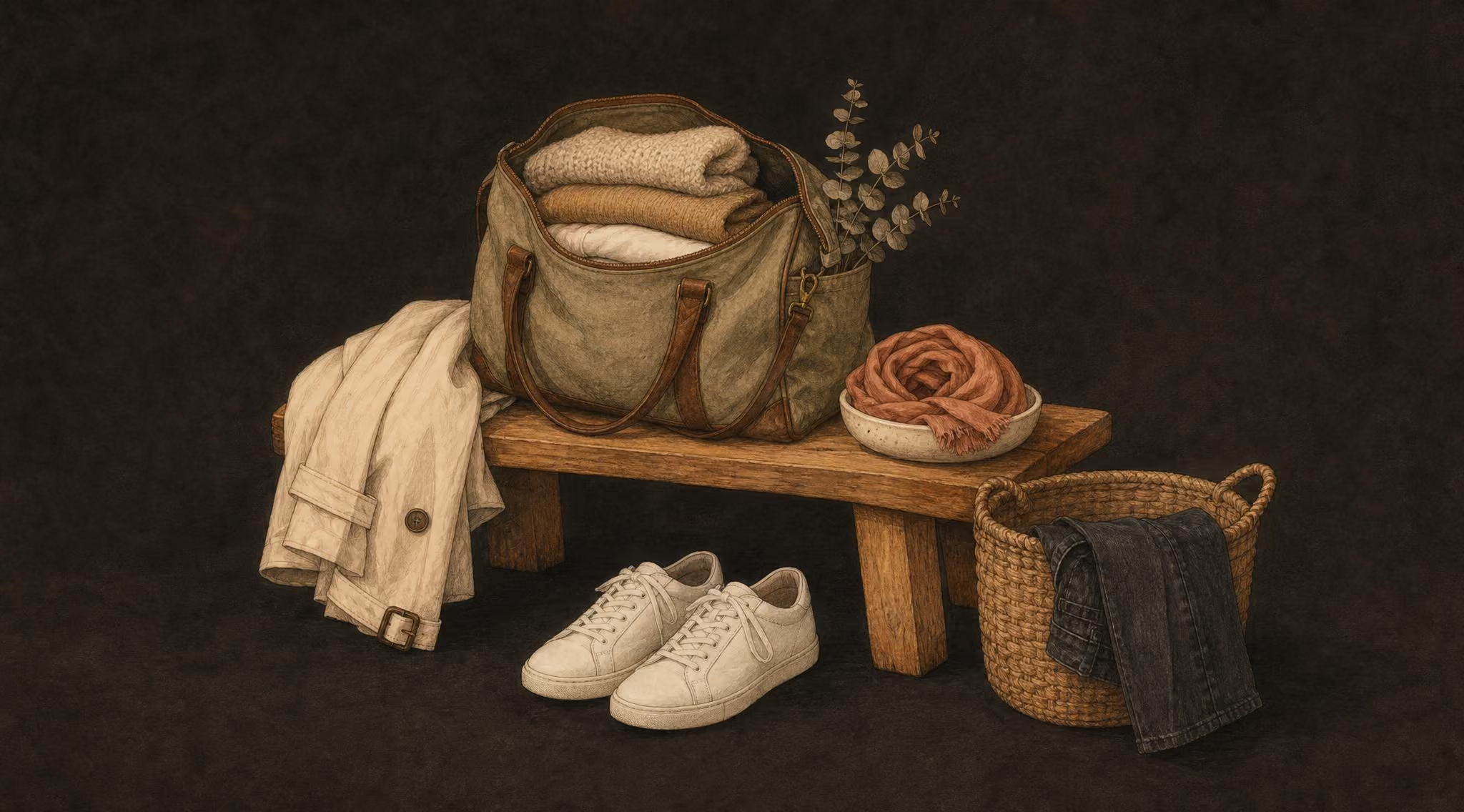
The basket fills faster than the wardrobe empties. A jumper worn for an afternoon, jeans worn to the shops and back, a shirt that only went to one meeting: in they go, out of habit, because worn has come to mean dirty.
It usually isn't. And every wash takes a little out of the clothes it cleans.
Washing is wear
A washing machine works by tumbling fabric against water, detergent and itself. That gets the dirt out, and it also fades colour, loosens fibres and sends some of them down the drain.
When researchers at the University of Leeds put T-shirts through sixteen washes, a shorter, cooler cycle left them with significantly less colour loss than a long, warm one. A study on real household laundry found the same pattern: a cold, quick wash kept whites whiter and shed fewer fibres than a long one at forty degrees. The textile care-labelling body's first piece of laundry advice is simply to wash less often. And a tailoring brand's own guide says plainly that cleaning a suit after every wear makes the fabric wear out faster.
Plenty of clothes are washed out before they're worn out.
What does need a wash every time
The rule is skin. What sits against it, and what you've sweated in, goes in the wash after one wear:
- Socks and underwear. Health services say clean ones every day.
- Sports kit you've worked hard in, and swimwear.
- Close-fitting tops worn straight against the skin, like a T-shirt under a jumper.
Bras sit in between. A dermatologist's rule of thumb is every two or three wears.
What can go much longer
Jeans. Levi's suggests a wash about every ten wears, and a damp cloth for small marks in between. Keep them out of the tumble dryer, which can shrink and fade them.
Wool. The Woolmark Company calls wool naturally resistant to odour, stains and creases, and says it needs less washing than other fibres. Give a jumper a day's rest between wears so the fibres spring back. People already sense this: studies of how households really wash find wool worn about twice as many days between washes as similar cotton.
Suits and tailoring. A tailoring brand's advice is to have a suit cleaned no more than three times a year, to rest it a day or two between wears, and to brush and steam it in between.
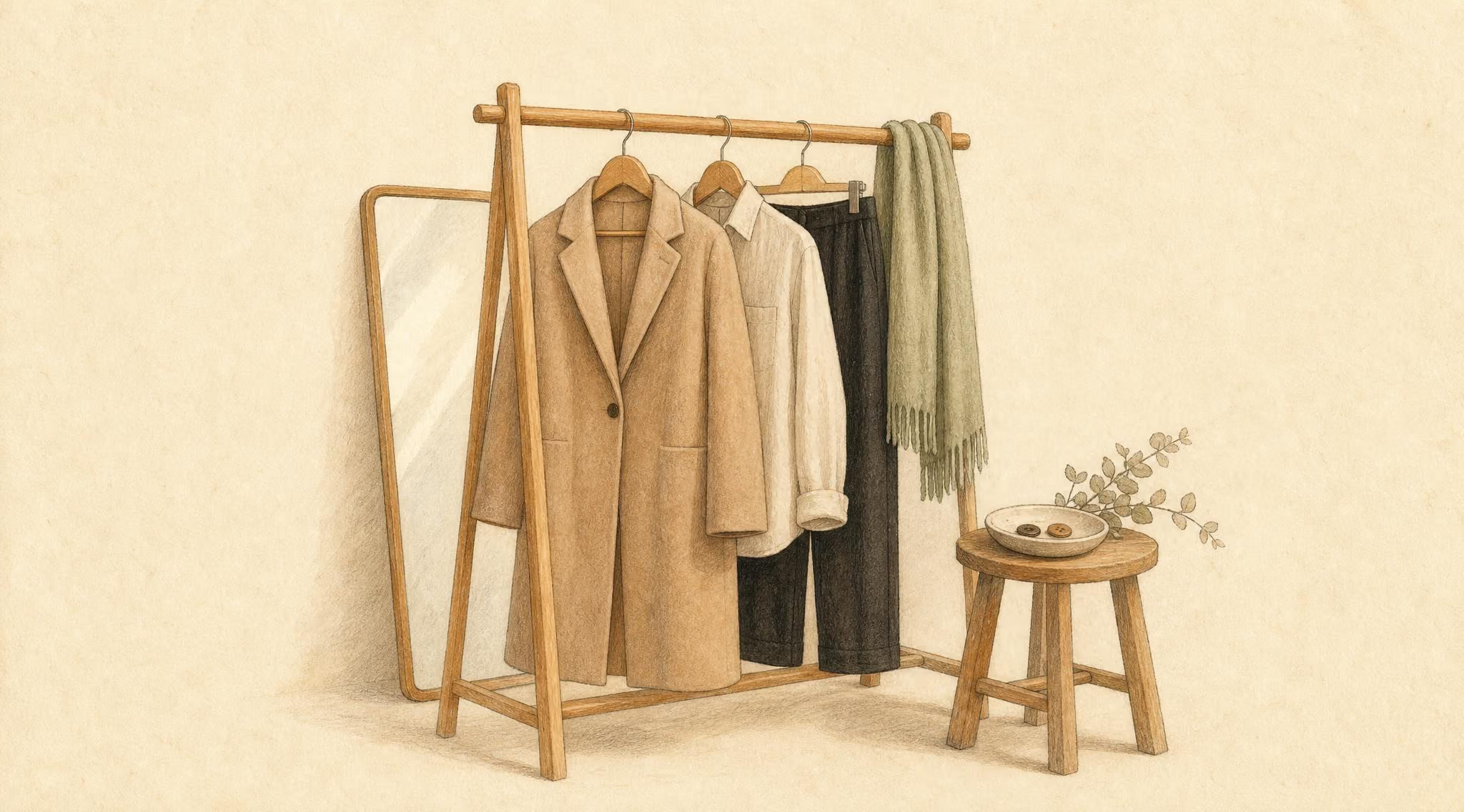
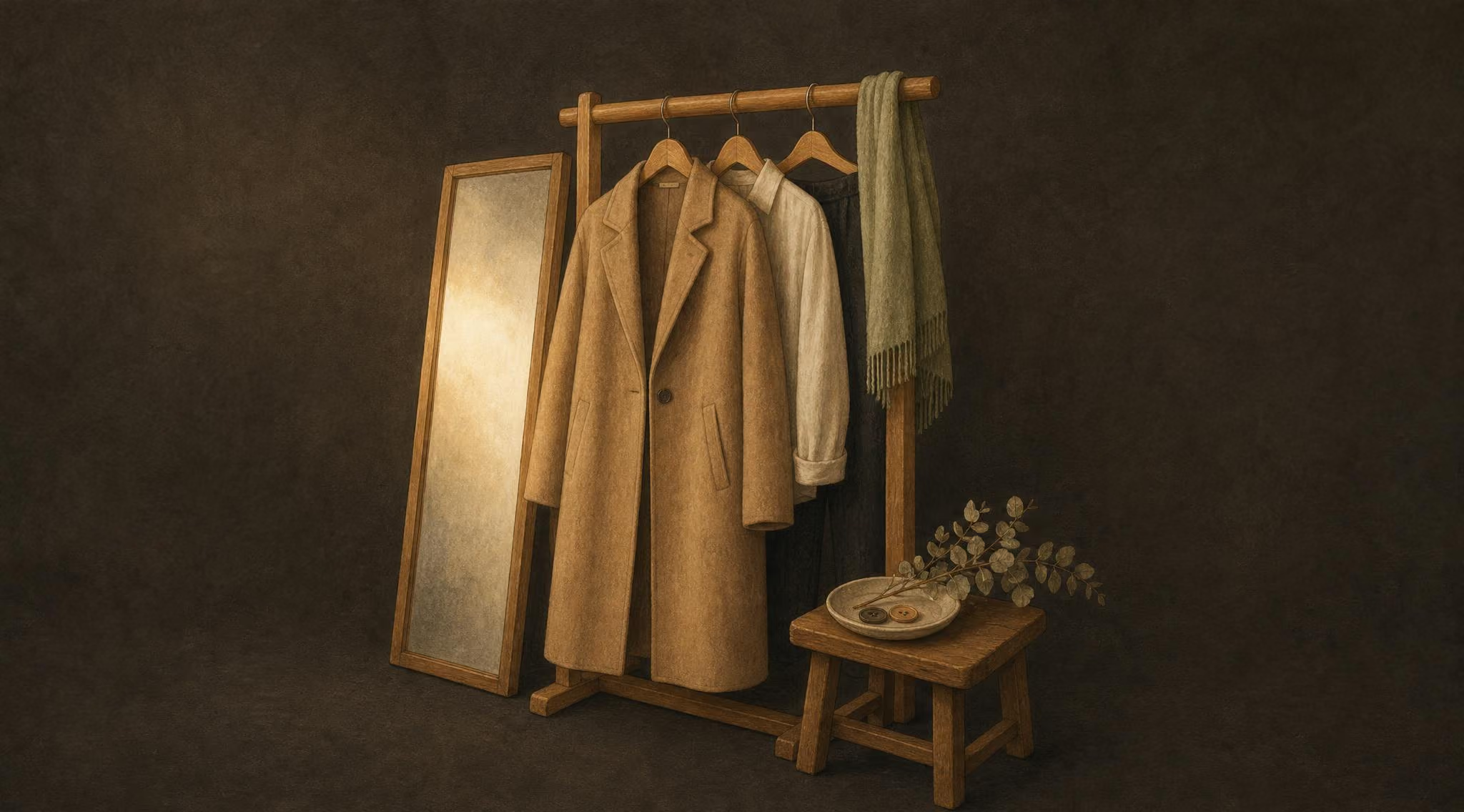
Coats. Brush a wool coat after wearing it and hang it to air. A waxed or rubberised coat isn't meant for the machine at all: its makers say sponge, wipe or spot-clean.
Instead of a wash
Most of what makes clothes feel ready for the basket can be fixed in a few minutes:
- Air it. Hang it by an open window, or lay a wool piece flat for an hour to lose a smell of cooking or smoke.
- Steam it. Hang it in the bathroom while you shower; the steam drops the creases.
- Brush it. A clothes brush, lengthwise, lifts the dust that would otherwise turn into a stain.
- Spot-clean it. Blot, don't rub. Work from the edge of the mark inwards, and test on a hidden seam first.
When to wash anyway
When something smells after a night's airing, when a stain won't lift with a cloth, when it's been worn through a fever or a hot day: wash it. And when you do, the research points the same way twice. Cooler and shorter is kinder to the clothes.
Sources
- The Woolmark Company, caring for wool and stain removal, read October 2026.
- Levi's, how to wash and care for your denim, read October 2026.
- University of Leeds, “Quicker and cooler is best for clothes”, January 2020.
- Lant and others, microfibre release from real soiled consumer laundry, PLOS ONE, June 2020.
- University of Alberta, “Jeans remain surprisingly clean after a year of wear”, January 2011.
- Laitala, Klepp and Henry, use phase of wool apparel, PLATE conference, 2017.
- GINETEX, Clevercare: sustainable laundry, read October 2026.
- Suitsupply, how to take care of your suits, read October 2026.
- Barbour, how to clean your Barbour jacket, read October 2026.
- Hackensack Meridian Health, how often should you wash your clothes?, January 2022.
- NHS, athlete’s foot, reviewed April 2024.
- Cleveland Clinic, how often to wash your bras, March 2022.
Dresd keeps "Due for a wash" apart from "In the wash": a piece you've worn stays in your closet, ready to wear again, until you decide it goes in the basket. Ask the stylist about any piece, and it will tell you how to care for it.
Get the app